
Scale & Weighing System Calibration Services
Scale and Weighing System Calibration Services from PCS
Accurate weight measurement forms the foundation of commerce, quality control, and regulatory compliance across countless industries — from precise laboratory analysis and pharmaceutical production to heavy industrial manufacturing, logistics, and infrastructure operations. Whether weighing samples measured in milligrams or massive loads in industrial environments, weighing systems must deliver consistent, reliable performance that ensures fair transactions, product quality, and operational efficiency. When scales and weighing instruments drift out of calibration, the consequences can include inventory discrepancies, regulatory violations, customer disputes, and significant financial losses.
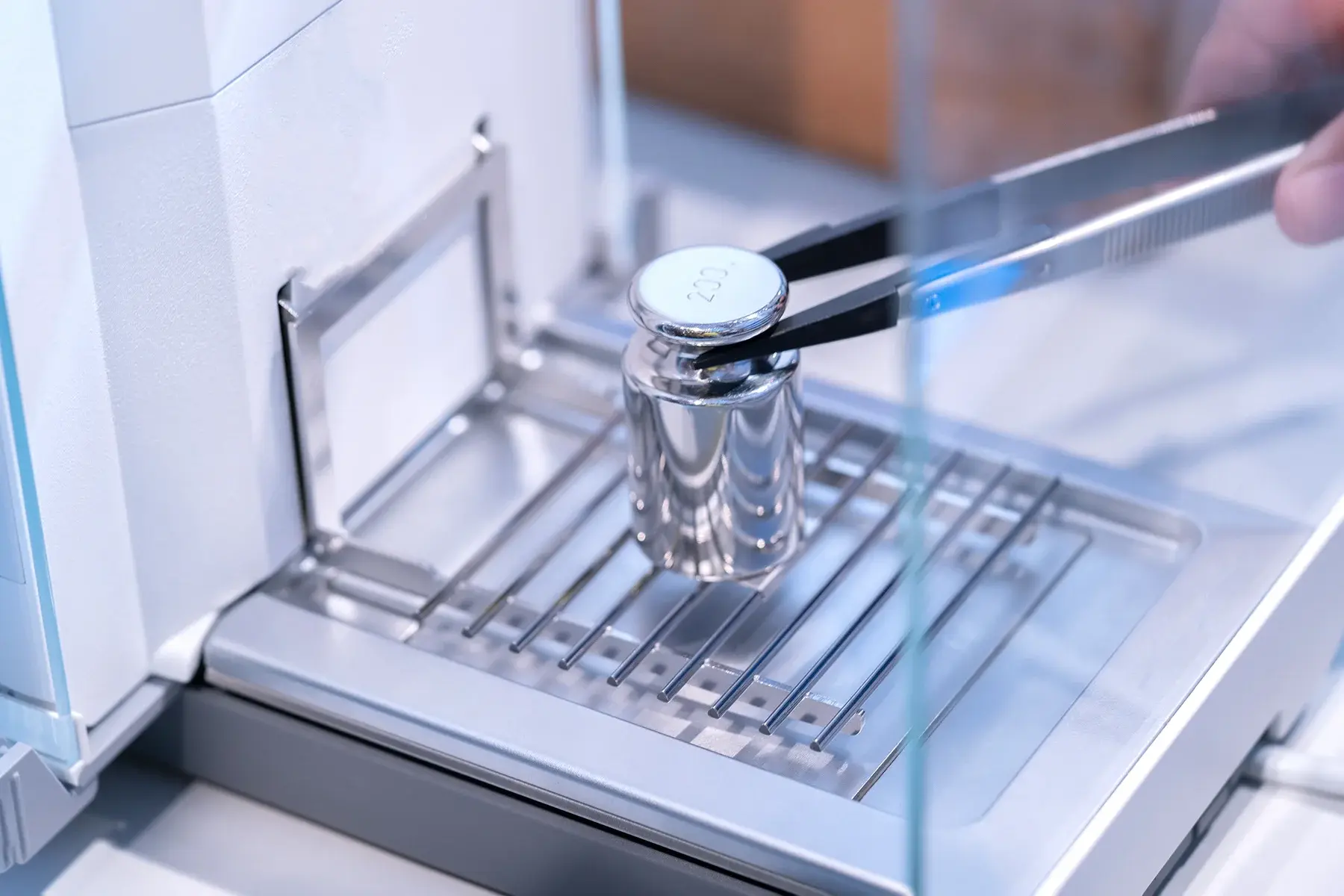
Precision Calibration Systems provides comprehensive scales and weighing systems calibration services that ensure your weight measurement equipment delivers the precision and reliability your critical operations demand. Our calibration procedures follow ASTM E898-88 and are ISO 17025 Accredited. Our thorough analytical balance calibration is carried out by highly trained technicians using ASTM certified class 1 weights. The calibration procedure begins with taking “as found” linearity measurements which are recorded so that the customer can identify if there were any out of tolerance issues that might have affected the quality of their product produced prior to calibration. Once the as found conditions are recorded and communicated to the customer, our technicians will proceed with cleaning, re-leveling, and re-calibrating the balance or scale. The final step includes measuring and recording “as left” linearity, pre-load linearity, corner load and repeatability conditions which will ultimately be reported on the long form calibration certificate.
Large scale calibration, including industrial scales up to 10,000 lbs is achieved by using ASTM Class 6 and 7 weights and employs a very similar calibration procedure used for Analytical balances. During industrial scale calibration, “as found” conditions are measured, recorded and communicated to the customer before re-calibration is performed. Finally, “as left” linearity and corner load readings are taken and recorded before the final calibration certificate is completed.
Balance & Scale Calibration Services:
- Analytical Balance
- Counting Scale
- Bench Top Scale
- Floor Scale
- Shipping Scale
- Industrial Scale
Don't see your tool listed here? Contact us for a custom quote.
What is Scale & Weighing System Calibration?
Scales and weighing systems calibration is the systematic process of verifying and adjusting weighing instruments to ensure they accurately measure mass and weight across their specified capacity ranges and operating conditions. This essential service compares your weighing equipment against certified test weights and reference standards with known, traceable mass values to identify any deviations from their specified accuracy ranges and regulatory requirements.
During scales and weighing systems calibration, state-certified technicians evaluate each instrument's performance using precision test weights throughout the weighing capacity range. They document any measurement variations discovered in detailed before-and-after data reports and perform necessary adjustments to restore accuracy to manufacturer specifications and regulatory standards. When instruments cannot be adjusted to meet their original specifications, comprehensive calibration reports provide the deviation data essential for measurement uncertainty calculations and informed maintenance or replacement decisions.
The calibration process follows rigorous protocols that ensure consistency, reliability, and legal defensibility. Each calibrated weighing system receives comprehensive documentation that traces its accuracy back to national mass standards, providing the measurement traceability that commercial weighing regulations, quality management systems, and trade requirements demand.
Why Scale and Weighing System Calibration is Essential for Your Operations
Commercial Accuracy and Fair Trade
When weighing determines product quantities for pricing, billing, or commercial transactions, accuracy directly affects profitability and legal compliance. Commercial scales used for trade must meet legal metrology requirements and state weights and measures regulations to ensure fair transactions between buyers and sellers. Properly calibrated weighing systems protect both business revenues and customer interests through precise, legally defensible weight measurements.
Inventory Control and Cost Management
Accurate inventory management depends on reliable weighing systems for receiving verification, stock control, and shipping operations. Weight measurement errors can lead to inventory discrepancies, ordering mistakes, shrinkage issues, and hidden costs throughout supply chain operations. Calibrated weighing systems ensure accurate inventory data and help optimize purchasing, storage, and logistics decisions.
Quality Control and Process Management
Manufacturing and production operations depend on precise weight measurements for ingredient proportioning, batch consistency, quality verification, and process control. From pharmaceutical dosing and chemical formulation to food production and materials manufacturing, accurate weighing ensures product consistency, prevents waste, and maintains quality standards that protect brand reputation and customer satisfaction.
Regulatory Compliance and Documentation
Industries from pharmaceuticals to food production, aerospace to semiconductors operate under strict regulations requiring traceable weight measurements and calibrated equipment. FDA regulations, USDA requirements, cGMP standards, AS9100 aerospace standards, and state weights and measures laws mandate proper scale calibration with documented traceability. Comprehensive calibration records are essential for regulatory compliance, successful audits, and legal defensibility.
Safety and Load Management
Many operations involve weighing for safety purposes including vehicle load limits, material handling safety, and heavy freight transport compliance. Accurate weight measurement prevents overloading that could cause equipment failures, structural damage, transportation violations, or safety hazards. Calibrated weighing systems ensure safe load management and protect workers, equipment, and public infrastructure.
Waste Reduction and Efficiency Optimization
Precise weight measurement helps minimize material waste, optimize material usage, and improve operational efficiency. Whether measuring expensive raw materials, controlling portion sizes, or managing waste disposal costs, accurate weighing enables better resource utilization and cost control throughout operations.
Request a Quote for Precision Calibration from PCS
-
ISO/IEC 17025 accredited calibration laboratory
-
Affordable calibration services with some of the fastest turnaround times in the industry
-
Mail-in laboratory calibration available in all 50 states
-
On-site calibration service available in Tennessee, Virginia, Alabama and Kentucky