
Is ±4% Torque Wrench Accuracy Enough for Your Application?
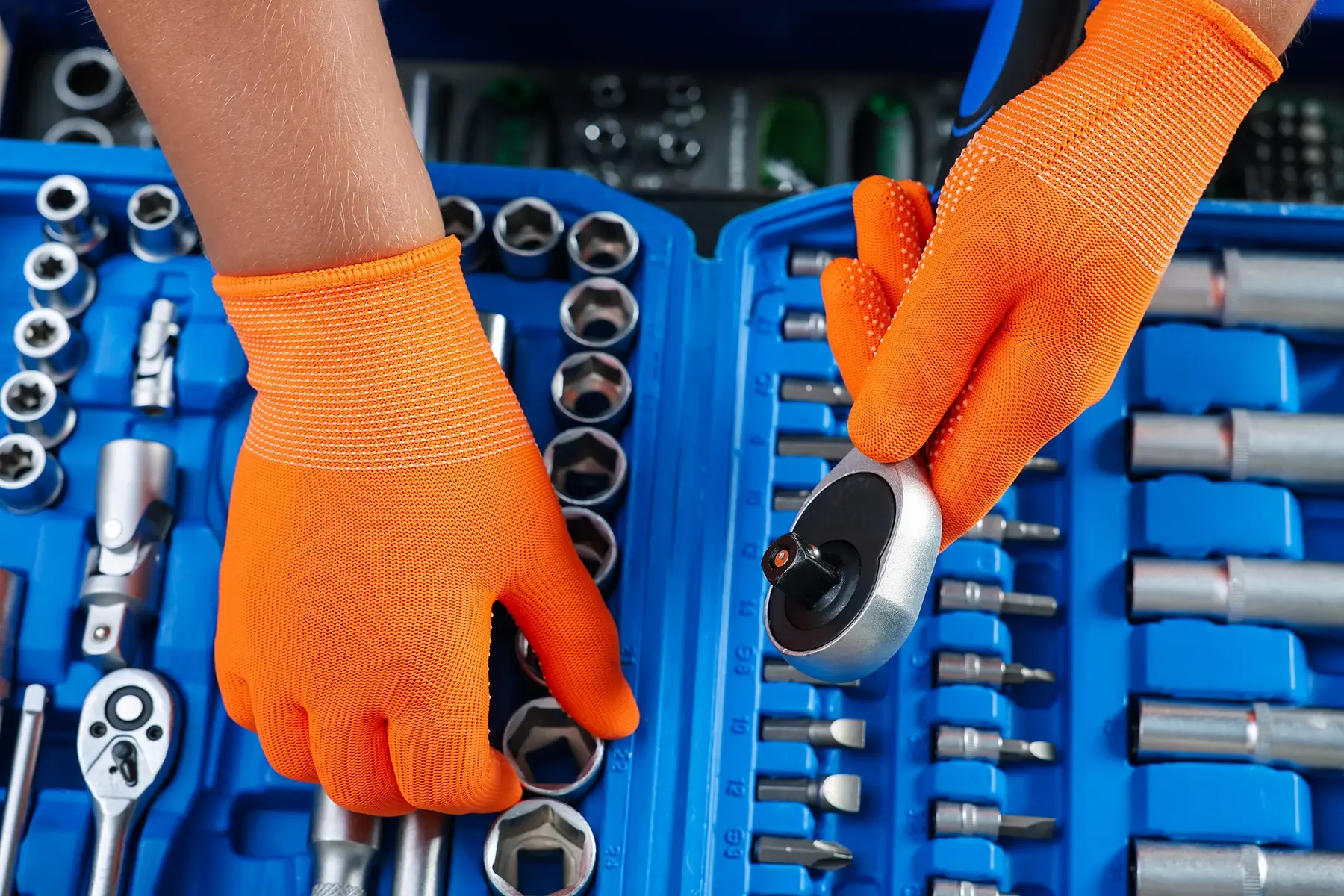
A torque wrench with a ±4% accuracy rating can apply torque up to 4% higher or lower than its target setting. For example, if a wrench is set to 100 ft-lbf, the actual torque delivered could range from 96 to 104 ft-lbf.
“±4%” is a common accuracy specification for torque wrenches, but that percentage doesn't always tell the whole story. How much does a 4% variation actually matter? And is ±4% accurate enough for your particular application?
The answer depends on how and where the torque wrench is being used. A ±4% tolerance may be more than adequate for one application but too broad for another. Understanding what the accuracy rating means, how it can be affected, and how it relates to your application can help you select the right tool and determine an appropriate calibration strategy.
Torque Wrench Accuracy vs. Precision
Accuracy and precision are often used interchangeably, but they describe two different things.
Accuracy refers to how close a measurement is to the true value. If a torque wrench consistently applies 105 ft-lbf when the actual target is 100 ft-lbf, the wrench is inaccurate even though it produces consistent results.
Precision refers to repeatability. A precise torque wrench produces consistent results when used under the same conditions. If a wrench produces readings of 97, 101, and 103 ft-lbf under identical conditions, it is not particularly precise.
Both are important when torque matters.
Accuracy helps ensure that the required engineering specifications are being met, while precision helps provide consistent results across fasteners, assemblies, and operators. Calibration certificates can provide information about both how closely the tool performs to its target and how consistently it performs during repeated testing.
How Your Technique Can Affect Torque Wrench Accuracy
A torque wrench can be properly calibrated and still produce inconsistent results if it isn't used correctly. The person operating the tool can have a significant impact on the torque being applied.
A few aspects of proper technique are particularly important:
Read the setting correctly. The torque wrench scale should be read straight on at eye level. Viewing the adjustment dial from an angle can make it easier to misread the setting and unintentionally set the wrench too high or too low.
Apply force smoothly. Torque should be applied slowly and steadily so the operator can stop at the wrench's release point, whether that is a click or another signal. Applying force too quickly can cause the target value to be exceeded, particularly when working with smaller fasteners and tighter tolerances.
Use the proper hand position. Torque wrenches are generally designed for force to be applied at the center of the handle. Holding the tool somewhere else or applying force elsewhere on the wrench can affect how the internal mechanism responds.
Even a highly accurate, properly calibrated torque wrench cannot compensate for poor technique. Consistent setup and deliberate operation are important for achieving results that align with the tool's stated accuracy.
External Factors That Can Affect Torque Readings
The torque wrench itself isn't the only factor that can influence results. Conditions surrounding the fastener and assembly can also affect the relationship between applied torque and the resulting clamp load.
Some of the variables that can make a difference include:
- Friction: Friction at the threads or beneath the bolt head affects how much applied torque becomes useful clamp load. Increasing or decreasing friction can change the result.
- Surface coatings: Coatings can reduce friction and change the amount of torque required compared with an otherwise similar uncoated fastener.
- Temperature: Metals can expand, contract, and behave differently at different temperatures, which can affect measurements.
- Material type: Aluminum, stainless steel, brass, and other materials have different properties that can influence torque requirements.
- Fastener shape and size: Differences such as thread type, washer dimensions, and nut size can change how torque is distributed.
Because of these variables, even a well-calibrated torque wrench cannot account for every condition surrounding an assembly. Changes in the environment, materials, or fastener setup can cause actual results to vary by more than the tool's stated ±4% accuracy.
For applications where precision is important, it is essential to consider the complete assembly rather than looking at the torque wrench alone.
What Does ±4% Accuracy Mean in Actual Torque?
The ±4% specification applies to the wrench's target or setting, rather than the tool's full-scale capacity.
For example, a torque wrench set to 100 ft-lbf with a ±4% accuracy specification could actually deliver between 96 and 104 ft-lbf. That's an 8 ft-lbf range.
At a target of 250 ft-lbf, the same ±4% tolerance translates to a range of 240 to 260 ft-lbf, creating a 20 ft-lbf difference.
As the target torque increases, the actual amount represented by a percentage-based tolerance increases as well. A 4% variation may sound relatively small, but it can represent a significant difference in actual torque at higher settings.
It's also important to remember that a torque wrench's accuracy isn't necessarily consistent throughout its entire operating range. Most torque wrenches perform best within the middle 20–80% of their rated capacity. Accuracy can decline when the wrench is used near the low or high ends of its range.
So, for example, using a 250 ft-lbf wrench at 30 ft-lbf may not provide the same effective accuracy as using it within its optimal range.
Why Torque Specification Conditions Matter
The conditions associated with a torque specification need to match the conditions in which the fastener is actually being installed.
Friction is particularly important because the amount of clamp load generated by a given torque depends in part on the friction between the fastener and the surfaces it contacts.
Lubrication, surface coatings, temperature, material type, and thread pitch can all affect friction. If the specified torque assumes one set of conditions but the actual installation uses another, the resulting clamp load can be very different.
For example, applying a dry torque specification to a lubricated fastener can result in overtightening. Lubrication reduces friction, allowing the fastener to turn more easily and potentially creating substantially more clamping force.
To help prevent problems such as stripped threads, broken bolts, or compromised joint strength, torque values should be verified for the actual installation conditions. When there is uncertainty, consult the manufacturer's specifications for the specific application or applicable reference resources from organizations such as SAE or ISO.
The goal is not simply to have a torque wrench that is accurate under laboratory conditions. The goal is to achieve the intended result when that wrench is used in the actual application.
Torque Wrench Accuracy Requirements by Industry
The level of torque accuracy needed can vary significantly between industries and applications. The consequences of an incorrect torque value are an important factor in determining the appropriate tolerance.
| Industry | Typical Torque Accuracy Requirement | Notes |
|---|---|---|
| Aerospace | ±2–4% | Some specifications require ±2–3%; highly regulated |
| Automotive (critical fasteners) | ±2–4% | Engine fasteners; varies by OEM specification |
| Automotive (general assembly) | ±4–6% | Lug nuts, body panels, non-critical joints |
| Medical devices | ±2% or tighter | Often a regulatory/FDA requirement |
| General manufacturing & maintenance | ±5–10% | Wider tolerance acceptable for non-critical joints |
The reason these requirements vary is simple: the consequences of an inaccurate torque application aren't the same in every situation. A fastener used in an aircraft flight control assembly has very different implications than one used on an HVAC equipment access panel.
When Is ±4% Accuracy Not Enough?
A ±4% torque wrench is suitable for many fastening applications, but some applications require tighter tolerances.
Critical safety fasteners, where failure could directly result in injury or a catastrophic event, commonly require tighter accuracy. Examples include applications involving medical devices, primary aircraft structures, and pressure vessel closures, where torque may be specified to ±2% or better.
Accuracy can also become especially important in applications with significant liability concerns. If a fastener fails, calibration records and documented accuracy can become important when determining whether the proper procedures and equipment were used.
Regulatory requirements may also call for greater accuracy. Examples include:
- FAA regulations in aviation
- FDA guidelines in medical device manufacturing
- ISO standards in quality-controlled environments
In these situations, a ±4% torque wrench may not meet the applicable requirements.
When tighter accuracy is necessary, options include using tools designed for tighter tolerances, such as ±1–2%, and increasing calibration frequency so that changes in tool performance can be identified before they become a problem. Highly critical applications may require both.
When Is Greater Torque Accuracy Unnecessary?
More accuracy isn't automatically better for every application.
For general maintenance, non-structural fasteners, and equipment that can tolerate a broader range of clamp forces, extremely tight torque tolerances may not provide a meaningful benefit. Requiring tighter tolerances can increase tool costs, calibration costs, and downtime without improving the outcome.
A risk-based approach can help determine where tighter accuracy is actually needed.
Consider which applications involve critical fasteners and which do not. Calibration resources can then be focused on the torque wrenches used for critical applications, while less demanding applications may be able to operate with wider tolerances and longer calibration intervals.
How Calibration Helps Maintain Torque Wrench Accuracy
Calibration is the primary way to maintain torque wrench accuracy over time. It verifies the performance of the tool against a known standard and, when necessary, allows adjustments to bring the wrench back within its specified accuracy.
During calibration, a certified technician applies known loads to the torque wrench and measures its actual output at multiple points across its range.
The resulting as-found data shows how the wrench was performing before any adjustments were made. If the tool is found to be out of tolerance, that information can be important because work performed since the previous calibration may need to be reviewed.
After adjustment, as-left data documents the wrench's condition and confirms that it meets the applicable specification before it returns to service.
Regular calibration is especially important because torque wrench components can wear with use. Ratcheting mechanisms, springs, and click mechanisms can all degrade over time. A wrench that originally met a ±3% specification could eventually drift to ±5% or worse after heavy use.
Calibration provides a way to identify that change and correct it.
A quality calibration report should include readings from multiple torque settings, including both as-found and as-left results, along with pass/fail designations based on the tool's specifications. This provides documentation that the wrench is maintaining its required accuracy.
How to Choose the Right Torque Wrench Accuracy
Selecting a torque wrench shouldn't simply mean choosing ±4% because it's a common specification. The appropriate accuracy depends on what the tool is being used for and how much variation the application can tolerate.
A straightforward way to evaluate your requirements is to:
- Define the application. What does the fastener secure, and what could happen if it fails?
- Determine acceptable variation. How much deviation from the specified torque can the joint tolerate?
- Evaluate the risk. Consider safety concerns, regulatory requirements, and the potential cost of failure.
- Choose the appropriate tool. Match the torque wrench accuracy to the actual requirements of the application.
It can also help to ask:
- Is the fastener safety-critical?
- Are there industry standards or requirements that apply?
- What are the consequences of over-tightening or under-tightening?
- How consistent does the process need to be?
When you're uncertain about the appropriate accuracy level or calibration interval, a calibration provider or torque specialist can help evaluate the application and determine an approach that balances accuracy requirements and cost.
Frequently Asked Questions About Torque Wrench Accuracy
What does ±4% accuracy mean on a torque wrench?
A ±4% accuracy rating means the torque wrench may deliver up to 4% more or 4% less torque than the target setting. At 100 ft-lbf, that means the actual torque could range from 96 to 104 ft-lbf. At 250 ft-lbf, the range could be 240 to 260 ft-lbf.
Is ±4% accuracy sufficient for most applications?
Yes. ±4% accuracy is sufficient for most general manufacturing, maintenance, and automotive assembly applications. However, applications involving safety-critical fasteners, such as aerospace, medical devices, or pressure vessels, may require ±2–3% accuracy or tighter.
How frequently should a torque wrench be calibrated?
Calibration frequency depends on factors such as how heavily the tool is used, how critical the application is, and the manufacturer's recommendations. Annual calibration is a common starting point, while torque wrenches used frequently in critical applications may require more frequent calibration. A calibration provider can help establish an appropriate interval for a specific application.
Does torque wrench accuracy vary across its range?
Yes. Torque wrenches generally perform best within the middle 20–80% of their rated capacity. Accuracy can decrease when a tool is used near the low or high ends of its range, meaning its effective tolerance may be wider than the stated specification in those areas.
What is the difference between torque wrench accuracy and precision?
Accuracy describes how close the torque wrench is to the true target value, while precision describes how consistently it produces the same result. Both are important. Accuracy helps ensure engineering requirements are met, while precision supports repeatable results across fasteners, assemblies, and operators.
Conclusion
The right torque wrench accuracy isn't necessarily the tightest accuracy available. Instead, it should be based on the requirements and risks associated with the application.
A ±4% specification may be appropriate for many applications, while others may require a tighter tolerance. Understanding what that percentage represents, how accuracy can vary across a wrench's operating range, and how external conditions can affect torque results can help you make a more informed decision.
Calibration also plays an important role in maintaining torque wrench accuracy over time. By verifying tool performance and documenting as-found and as-left results, calibration helps ensure your torque wrench continues to meet its specified requirements.
Ultimately, choosing the appropriate accuracy level is about finding the right balance between application requirements, risk, and cost. When you're unsure what accuracy or calibration approach is appropriate, a qualified calibration provider can help you evaluate your needs and develop a strategy that works for your operation.
Request a Quote for Precision Calibration from PCS
-
ISO/IEC 17025 accredited calibration laboratory
-
Affordable calibration services with some of the fastest turnaround times in the industry
-
Mail-in laboratory calibration available in all 50 states
-
On-site calibration service available in Tennessee, Virginia, Alabama and Kentucky