
On-Site Calibration Services: When to Bring the Lab to Your Facility
For many measurement instruments, sending equipment to a calibration laboratory is the standard approach — and it works well. But for a significant category of instruments, shipping is impractical, introduces measurement error, or simply isn't possible. On-site calibration solves that problem by bringing the lab to your facility, calibrating instruments in the environment where they actually operate.
Understanding when on-site calibration is the right choice — and what to expect from a professional mobile calibration visit — helps you build a more complete and reliable calibration program.
When on-site calibration makes sense
Not every instrument is a good candidate for shipping to a lab. Several factors make on-site calibration the better or only workable option:
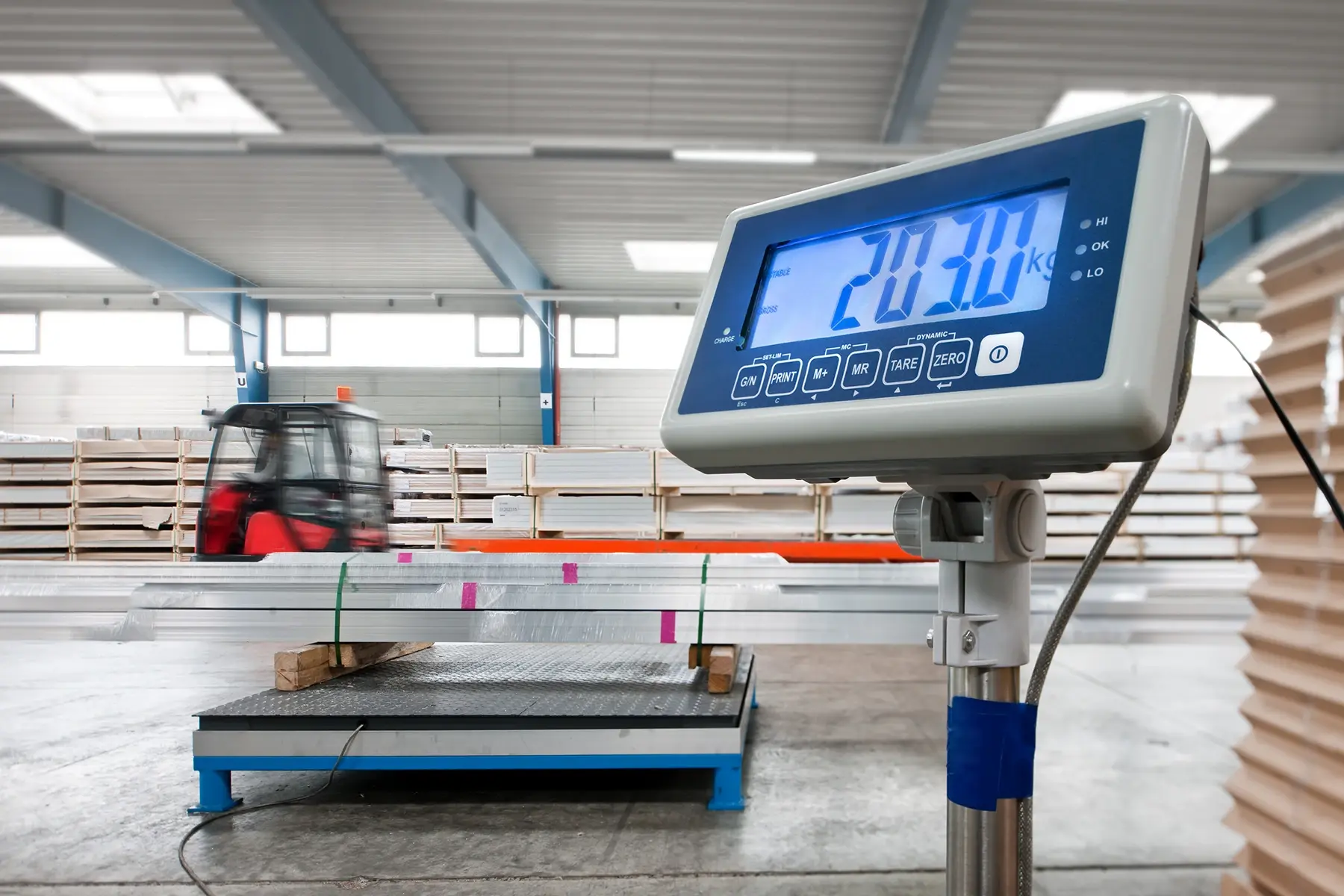
The instrument is too large or fixed to ship. Floor scales, industrial weighing systems, large force testers, and permanently installed process control systems cannot be removed from service and shipped without significant disruption and cost. On-site calibration is the practical solution for equipment in this category.
Shipping introduces measurement error. Scales and analytical balances are the clearest example — calibration results are only valid for the environment where the instrument operates. Vibration during shipping, changes in leveling, and differences in temperature and humidity between the lab and your facility can all affect calibration accuracy. Calibrating on-site, in the instrument's operating environment, eliminates those variables.
Minimizing equipment downtime is a priority. Shipping instruments to and from a calibration laboratory takes time. For instruments critical to production or operations, the turnaround window for a shipped calibration may be longer than your facility can accommodate. An on-site visit calibrates instruments in place without removing them from your environment.
You have a large volume of instruments across multiple disciplines. For facilities with significant calibration workloads, a scheduled on-site visit can be more efficient than managing multiple shipments across different instrument types and calibration cycles.
What a professional on-site calibration visit involves
A professional on-site calibration service arrives at your facility with portable calibration standards, calibrating instruments in place using the latest portable calibration equipment. PCS technicians work through your instrument list systematically, taking as-found measurements before any adjustment, performing calibrations against NIST-traceable reference standards, and documenting as-left results on long-form certificates.
During the visit, the calibration technician works through your instrument list systematically — taking as-found measurements before any adjustment, performing calibrations against NIST-traceable reference standards, and documenting as-left results on long-form certificates. Each instrument is calibrated in its operating location, and all results are fully documented for your quality system.
The disciplines available on-site cover the full range of PCS calibration capabilities, including temperature, dimensional, torque, scale, electrical, force, medical, spectrophotometer, pressure, flow, microscope, and optical comparator calibration.
The role of ISO/IEC 17025 accreditation in on-site calibration
ISO/IEC 17025:2017 accreditation applies to the laboratory and its processes — not just to a fixed physical location. An accredited laboratory that provides on-site calibration services performs that work to the same technical and documentation standards as in-lab calibration. The certificates produced carry the same accreditation, the same NIST-traceable reference standards, and the same as-found/as-left documentation.
This matters because the choice between on-site and in-lab calibration should be driven by what's right for the instrument — not by a tradeoff in certificate quality. With an ISO/IEC 17025 accredited provider, there is no tradeoff. Most quality standards your organization may be registered to — including ISO 9001, AS9100, and ISO 13485 — require that measurement equipment be calibrated and traceable to national or international standards. ISO/IEC 17025 accreditation is the most reliable way to demonstrate that traceability whether calibration happens in the lab or at your facility.
Service area
Precision Calibration Systems provides on-site calibration services across Tennessee, Virginia, Alabama, and Kentucky. Major cities frequently visited include:
-
Tennessee: Knoxville, Johnson City, Nashville, Cookeville, Bristol, Murfreesboro, Kingsport, Lavergne, Chattanooga, Jackson
-
Virginia: Abingdon, Bristol
-
Alabama: Huntsville, Decatur
-
Kentucky: Louisville, Lexington
For facilities outside these areas or with custom calibration requirements, contact PCS directly to discuss service options.
Planning an on-site calibration visit
Getting the most from an on-site calibration visit starts with preparation. Having a current instrument inventory ready — with instrument types, makes, models, serial numbers, and calibration due dates — allows the visit to run efficiently and ensures nothing is missed.
For multi-discipline visits covering a large number of instruments, scheduling the visit in advance and confirming the instrument list with the calibration provider helps the technician arrive prepared with the right reference standards and equipment for every discipline on the list.
Precision Calibration Systems provides ISO/IEC 17025 accredited on-site calibration across Tennessee, Alabama, Kentucky, and Virginia, using NIST-traceable reference standards across all disciplines.
Ready to schedule an on-site calibration visit? Contact Precision Calibration Systems to discuss your facility's instrument list and service area.
FREE DOWNLOAD
The Complete Guide to ISO/IEC 17025 Conformity Readiness
Download the Complete Guide to ISO/IEC 17025 Conformity Readiness — a practical reference for quality managers covering what ISO 9001, AS9100, IATF 16949, and more actually require, what a compliant certificate should contain, and how to set and justify calibration intervals.
Request a Quote for Precision Calibration from PCS
-
ISO/IEC 17025 accredited calibration laboratory
-
Affordable calibration services with some of the fastest turnaround times in the industry
-
Mail-in laboratory calibration available in all 50 states
-
On-site calibration service available in Tennessee, Virginia, Alabama and Kentucky