
What to Look for in an ISO/IEC 17025 Accredited Calibration Provider
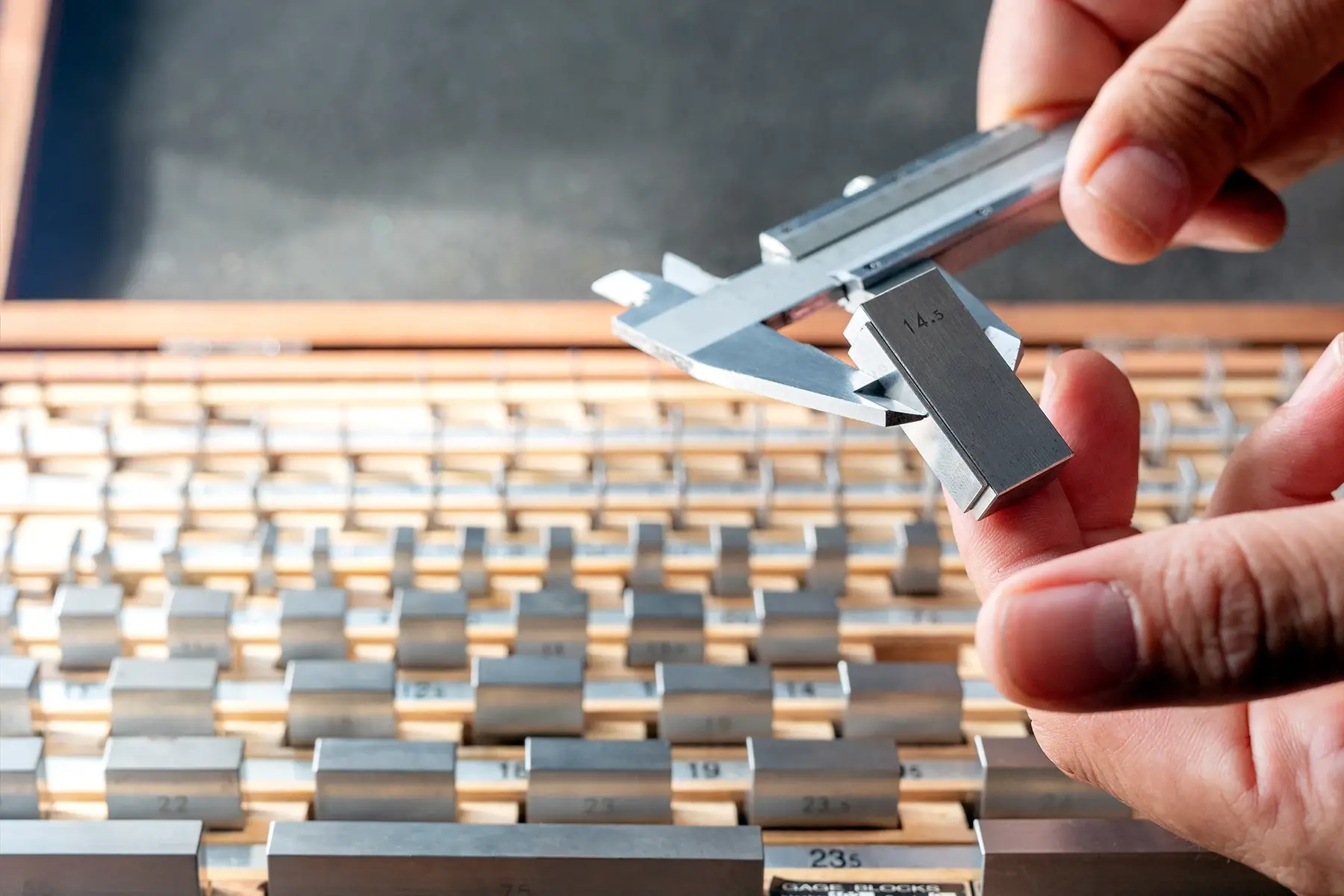
When your production line, quality program, or regulatory compliance depends on accurate measurements, the calibration lab you choose matters as much as the instruments themselves. Not all calibration services are equal — and understanding what separates an accredited provider from a generic one can protect your product quality, your compliance posture, and your bottom line.
What instrument calibration services actually cover
Instrument calibration is the process of comparing a measurement instrument against a known reference standard to verify its accuracy and, where needed, adjusting it to bring it within specified tolerances. A professional calibration service handles the full scope of that process: receiving and logging your equipment, performing the comparison against NIST-traceable standards, documenting the results, and returning calibrated instruments with a certificate that your quality team can rely on.
The range of instruments that fall under calibration services is broad. Dimensional tools such as calipers, micrometers, and pin gauges, electrical instruments including multimeters and oscilloscopes, pressure gauges, torque wrenches, temperature probes, scales and balances, and optical instruments like spectrophotometers all require periodic calibration to maintain measurement integrity.
Choosing an ISO/IEC 17025 accredited calibration lab
ISO/IEC 17025:2017 is the international standard for the competence of testing and calibration laboratories. It is a conformity assessment standard — a laboratory becomes accredited to ISO/IEC 17025 by demonstrating technical competence, measurement traceability, and a validated quality process to an independent accreditation body such as A2LA, ANAB, or NVLAP.
Most quality management system standards your organization may be registered to — ISO 9001, AS9100, and ISO 13485 among them — require that your measurement equipment be calibrated and traceable to national or international standards. They don't always explicitly require that your calibration provider hold ISO/IEC 17025 accreditation. But accreditation is consistently the most reliable way to satisfy that traceability requirement. Standards like IATF 16949, ISO 15189, and AASHTO R 18 explicitly require ISO/IEC 17025 accreditation for external calibration providers. Others, including ISO 9001, AS9100, and ISO 13485, prefer it as the most reliable way to demonstrate traceability and supplier competence.
NIST traceability — the unbroken chain of comparisons linking your instrument back to national measurement standards — is a core requirement of ISO/IEC 17025 accreditation. When a lab is accredited, traceability is built into the process, not an optional add-on.
What to look for when evaluating a calibration service
Accreditation scope matters as much as accreditation status. A lab may be accredited for a subset of disciplines, so confirming that the specific instruments and measurement ranges you need fall within the lab's accredited scope is an important step before you commit. Ask to see the lab's scope of accreditation — accredited labs are required to make this available.
Turnaround time is a practical factor that affects your operations. Standard turnaround at a professional lab is typically five to ten business days, with expedited options for critical instruments. On-site calibration services, where a technician comes to your facility, are worth considering for large or fixed equipment that is difficult or risky to ship.
Certificate quality is another differentiator. A compliant calibration certificate documents the instrument identification, the standards used, the as-found and as-left measurements, the environmental conditions during calibration, and the technician's identification. If a certificate you receive does not include as-found data — the measurements before any adjustment — it is not giving you the full picture your quality system needs.
How calibration intervals affect your compliance posture
Calibration is not a one-time event. Instruments drift over time, and your quality program requires that calibration be performed at defined intervals. The right interval depends on the instrument type, the manufacturer's recommendation, the conditions the instrument operates in, and the risk level of the measurements it supports. A calibration lab with strong technical depth can help you assess and document appropriate intervals rather than defaulting to an arbitrary annual schedule.
Choosing a lab that supports your locations
For manufacturers or quality-sensitive organizations operating across multiple facilities, calibration management becomes a coordination challenge as much as a technical one. A calibration lab network with locations across your operating geography — or robust on-site service capability — simplifies that coordination and keeps your certificates consistent across sites.
Precision Calibration Systems is an ISO/IEC 17025 accredited calibration laboratory serving manufacturing, medical, and aerospace customers from its Morristown and Winchester, Tennessee locations, with on-site service options and the backing of the Accredited Labs nationwide network.
Ready to schedule calibration for your facility? Request a quote from Precision Calibration Systems — ISO/IEC 17025 accredited, NIST traceable, with locations in Morristown and Winchester, Tennessee.
Request a Quote for Precision Calibration from PCS
-
ISO/IEC 17025 accredited calibration laboratory
-
Affordable calibration services with some of the fastest turnaround times in the industry
-
Mail-in laboratory calibration available in all 50 states
-
On-site calibration service available in Tennessee, Virginia, Alabama and Kentucky